Posts have been sparse lately as we've been traveling. Back to baseball card posts next week.
A science fiction coming of age story. Esme is the oldest daughter of Philip Coromina, the ruthless head of an interplanetary corporation which supplies weapons to the numerous warring factions in human space. When she is a young adult, her father contracts a deadly disease and she is thrust into a leadership role that she's been preparing for all her life but still isn't ready for. The story was OK but I found the character of Esme to be a constant whiner. Probably the beginning of a series.
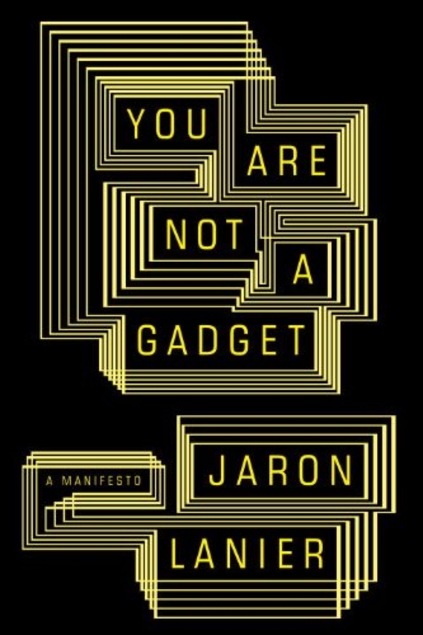
Although written in 2010, I found this book on the impact of our digital culture to be still relevant. OK, 2010 isn't that long ago, but it terms of the development of social technology it might as well be another century. I never heard of Lanier but apparently he's been long involved in technology and web development so he has the background to know what he's talking about.
In a small California town, a guy, who was the chief suspect in a series of rapes, is found murdered. It appears that the murder was motivated by revenge. His victims and their significant others are the obvious suspects. Various characters tell the story as a first person narrative, moving from person to person, always advancing the story. The town's mayor, the detectives in charge of the case, several of the rape victims, the murdered man's wife, and several others are all give points of view. I thought it was well written, but the choice of narrative device did not work, for me, as a murder mystery.
I was 15-years-old during the 1967 Summer of Love and wasn't too personally involved. But Danny Goldberg is about 16 months older than me and was. He writes about the politics, the personalities and the music of 1967. I was aware of what was going on mainly through the media (which Goldberg rightly points out, distorted what was really going on). An interesting read for an aging baby boomer like me. I'm not sure that people much younger than me (like my kids) would be too interested.
I am not a big fan of alternate history but I like Benford. The cover says it all. The story is about Karl Cohen, a perhaps now forgotten, member of the Manhattan Project developing an atomic bomb during World War II. Cohen, who happens to be Benford's actual father-in-law, was an early proponent of the centrifuge method of separating uranium isotopes. In real life, this method was not favored but in the book, it is and leads to the development of a bomb in time to use during D-Day. The story is pretty dry and technical but interesting.
Ian Rankin has a large body of work about Scottish detective Inspector Rebus. I've read a few of them. Rebus is retired now, suffering from COPD (too many cigarettes) and boredom. He starts looking into an old case, the murder of a rock and roll groupie, that was never solved. It turns out his hobby investigation has implications for a current case being worked on by his former colleagues and he finds himself as an unofficial advisor to the police. Hanging over the story is a shadow on his lung seen in an X-Ray. Could this be Rebus' last mystery?
I got the Kindle version of this book for free through bookbub.com. It was pretty simple minded military science fiction. After expanding through the galaxy for years, humans have run up against an implacable enemy which seems only intent on mankind's destruction. The main character is a ship captain who happened to be there when the aliens were first discovered and moves up through the ranks as he makes one fantastic tactical decision after another, saving the day for the humans. These brilliant moves however, are based on sudden visions of the future he has which tell him what to do. It was a pretty good read and I'll probably try to find the next part.
As I mentioned at the start of this post, we've been traveling. We were back on the East Coast visiting family and friends. At my sister-in-law's house, I admired a wooded sculpture on her mantle. Turns out it was made by the author of this book. Her husband helped get the book published. He had extra copies and gave me one. I grew up near Pennypack Park in northeast Philadelphia in the 1960s and spent a lot of time there so the book was very interesting to me.
Showing posts with label Book Club. Show all posts
Friday, June 2, 2017
Monday, May 8, 2017
April 2017 Reading List
I'm a little late posting this. I've been spending too much time with baseball cards the past week.
It's 100 years or so after some virus (mutated, man-made, who knows?) ravaged the world, killing many people but particularly women. And even now, the virus almost always kills a pregnant woman and her child. There seems to be 50 men or more for each woman. There is little technology and some, like Etta, scavenge for useful items. A small clan run by women called Fort Nowhere, operates within travel distance of St. Louis (hence the cover picture). The clan was founded by the Unknown Midwife soon after the crises. St. Louis is run by male slavers. Conflict ensues. This was pretty good. There seemed to be entirely too much backstory for a standalone novel, and sure enough, it's the second book of a series.
I wanted to read this before I saw the Scarlett Johansson movie. Apparently the movie is based on an anime movie which was based on this manga. The movie has not been well received but we liked it. To me, the movie seems to be an origin story, set prior to this manga. The manga was originally published in 1989-1990. The graphics are stunning. There are 6 interlinked stories in the volume. The author depicts a computer saturated world in 2029, where the main character, Major Motoko is a cyborg (a human brain and spinal column) in a manufactured body. She works for a government security division. The stories examine what it means to be human in a world where computer-brain interfaces are common.
If you were a fan of "The Daily Show" with Jon Stewart, you should read this book. It's consists of excerpts of interviews with numerous people involved with the show, telling the story of how the show came to be and how it grew. I started watching the show around 2004, and missed the early days, especially when Steven Colbert and Steve Carell were mainstays of the show. It is mainly about Stewart's reign on the show. The earlier version with Craig Kilborn is glossed over and there's really nothing about the current version with Trevor Noah.
This book is similar to Robinson's epic "Science in the Capitol" series, in that it deals with the consequences of man made climate change. This book is a bit more localized, focusing on New York City in the year 2140, a city where lower Manhattan is under water but life goes on. It has an enormous cast of characters. The story is mostly realistic, in my opinion. If you read and liked the "Science in the Capitol" series, you'll like this.
Did you know that many scholars consider James Buchanan, the last president before the Civil War, the Worst. President. Ever? Well neither did I. In fact, I probably could not have told you anything about Buchanan. This was an interesting read.
I generally like John Scalzi and was looking forward to reading this but I was a bit disappointed. The Empire of the story is a far-flung human space empire connected by spaceships able to travel through something called the Flow. The Flow is some sort of science fiction concept allowing faster than light travel, without actually breaking the light speed barrier. The Empire is ruled by large rich mercantile families, the richest family of which is the Emperor's family. But something is wrong with the Flow and a scientist has calculated that within 100 years, the Flow will move around, cutting off all the human planets from each other. Clearly the beginning of a new series by Scalzi.
This is Volume 2 of the Ghost in the Shell manga. It's sort of a sequel but the circumstances of the main character, Motoko are way different. She still works security but now for a giant company. The graphics are still stunning but the stories were hard to follow. Motoko seems to mostly live in the network, but able to inhabit various mechanical bodies at will. One reason the stories were hard to follow was that a lot of time she was operating multiple bodies at the same time, while also being represented as an on-line "body". The last 20 or 30 pages was composed of complicated but beautiful graphics but I had no idea what was going on.
This is the book that came before "The Book of Etta". Jane (not her real name) is the unnamed midwife of the title. She's a neonatal nurse in San Francisco as the unknown virus is ravaging the world. She herself gets the virus but survives. She begins a journey across the country, looking for safety, finally ending up at Fort Nowhere, the last ditch stand of the US government's attempt to fight the virus. A pretty good read.
Monday, April 3, 2017
Reading List - March 2017
Lots read in March.
The on-going story of Harry Bosch, former LA detective. Harry is hired by an old rich guy to determine if he has any heirs. Apparently he impregnated a girl in his youth and now wants to find the issue. Intertwined with this story is the search for a serial rapist. Not a bad read.
This started off well. In a near-future world, technology has been perfected that allow people to 'join'. With a 'quantum' device planted in their heads, several people can basically become one mind. The story is focused on one particular join of 5 people. One of the members (or "drives" as the book describes) learns he is dying of cancer. Than another gets murdered. The book was an interesting exploration of how a person (for each join is a single person) can live with multiple perspectives. What this sort of thing means for society as a whole (not everyone is on board with doing such a thing) is also explored. I was really enjoying this until the last couple of chapters when the whole story got hijacked by a rogue plot thread and went to pieces.
A good hard SF tale. Humanity is divided into two camps, those who live on earth and have rejected genetic and physical modifications and those living on other planets who have had to adopt such things in order to survive. And of course, they are at war. A roboteer is one who has mods allowing him or her to interface directly with a spaceship systems. Only the off-Earth humans practice this. The roboteer of the title discovers an alien presence which has a dire ultimatum for humans.
This was a sequel to "Planetfall" which was about a group of colonists from Earth to a distant planet. The woman leader of this expedition, a genius of enormous intelligence, invented the technology to build a spaceship capable of the journey. The ship was called "Atlas". This book is about the child (now grown) she left behind. He is a police detective investigating the murder of a cult leader. In my experience, the 2nd book of a series is normally not nearly as good as the first, but this book was first rate, and can be read as a standalone novel.
This book was a best seller in 2005 and I always meant to read it. A friend recently recommended it to me so I picked it up. Not really a book about economics it's more a book about how data can be used to tell a story. The point being that economists use numbers and data to understand how the economy. Here, economist Steven Levitt, with the help of journalist Stephen Dubner, explore how data can answer non-economic questions. One chapter was on baby names. Can we look at how successful people became based on the name they were given as a child. Pretty typical of the explorations in the book, it was hit or miss. They did attempt to predict the most popular baby names of 2015 based on trends and failed badly.
This near-future book reads like it was written by two NASA engineers, which it was. A private space company (headed by a very wealth man but not obviously Elon Musk) launches a rocket to a near Earth orbit to nudge it into orbit around the moon so it can be mined (by his company of course). Every thing that could go wrong does. Every. Damn. Thing. In the end, another private space company run by a rich guy works with NASA and the Russians to save the day. I'm sorry I wasted my time with this.
I'm sorry to say that this was another time waster. I've read about half (of the 21) Jack Reacher stories and am generally a fan. Jack is starting to show his age and in the last book suffered a concussion which seriously affected his actions and judgement. In this book, Child returns us to 1996, when Reacher was still a major in the military police. Reacher is recruited with an elite CIA agent and FBI agent (who barely have an impact on the story) to stop a mysterious American from making a deal with Middle East terrorists. The problem with this book is that, here in 2017, we know that was no serious terrorist action in 1996, so we already know the outcome. Well, actually, that's not the real problem. The story is told in a very flat manner with all sorts of dialog that doesn't sound even remotely the way real people speak. If you're a big Jack Reacher fan you may want to (and probably already have) read this. I'd advise to give it a pass.
This is not the first Swedish detective novel I've read. Apparently Scandinavian noir is very popular. It's the 9th novel featuring Inspector Irene Huss and some backstory was involved in this book but didn't make the book hard to follow. Despite some recent stories of refugee crime in Sweden, crime there, especially murder, is pretty low. Huss works in the 2nd largest city in Sweden, Gothenburg. Based on some brief Internet investigation of my own, Gothenburg, on average, would have maybe 1 murder a year. Surly not enough to support 9 murder mysteries. There are 2 murders and 3 attempted murders in this story which takes place in the fall of 2009. If you like this sort of novel, you'll like this.
This was fun. Since, as far as we know, time travel is impossible, you'd think there'd be nothing to write about. What Gleick does here is to explore the history of time travel literature. He observes that before H. G. Wells published "The Time Machine", time travel as a concept hardly existed. Now the concept is everywhere. Even if you're not a big science fiction fan you can probably name 10 novels, books or movies that deal with time travel. He also looks at the science of time but not in any great detail. He quotes liberally from many literary sources including one of my favorite time travel movies ("Looper") and books ("How To Live Safely in a Science Fictional Universe" best piece of advice is if you ever see yourself coming out of a time machine, run away quickly). If you're not a big consumer of science fiction, this book might not be for you.
Wednesday, March 1, 2017
Reading List - February 2017
This is the 23rd Inspector Banks novel. I think I've read them all. I'm afraid this was a weak entry. As is often the case in these books, there are 2 investigations. Banks is investigating a case of "historical abuse", a famous person who, long ago, raped a young girl. It's a 'ripped from the headlines' kind of story as Robinson frequently references a recent actual case, of Jimmy Saville. The other case involved 'grooming', where young girls are taken by older men, given gifts, etc. until the girls trust them and have sex with them and their friends. Neither story was particularly strong and both were told with much preaching by the author.
This was a pretty ridiculous story. Faller is a guy who lives on what appears to be a fragment of our world, a fragment probably of New York City. Nobody, including him, can remember anything different. The people here are running out of food and things are getting desperate. He has some clues in his pocket which suggest an earlier life. He builds a parachute and leaps off the world to find there are other fragments of our world. The story is interspersed with another story of people trying to cure a deadly man-made disease by replicating the person's body without the disease (sounds like a plot from an old Star Trek episodes). This device is powered by a man-made black hole. What could go wrong? The stories eventually come together but incredulity was stretched way beyond the breaking point.
This is the classic 1965 spy novel by John Le Carre. His third novel, but his first best seller which enabled him to quit his day job with a British intelligence agency and become a full time novelist. I originally read this around when it was new, so I was 14-15 years old. It's probably one of the first really adult themes books I ever read. It's still a powerful story today. I also watched the movie, with Richard Burton. John Le Carre was a nobody when he wrote this book but within a year he was making a movie with Richard Burton, rewriting the script almost daily. He had to change the name of one of the characters in his novel from Liz because Liz Taylor was hanging around the set.
It's not really a coincidence that I just finished "The Spy Who Came In From The Cold". I got this biography from my youngest son for Christmas. It's probably not something I would have picked up on my own but it was a pretty good read. Le Carre (whose real name is David Cornwell), grew up during the Second World War. His father was a first-rate con man and Cornwell spent most of his life trying to recover from that. He wrote many more books than I realized. The description of his creative process was interesting. He would do extensive research, visiting each location in the novel if he could. He wrote in long hand, rewriting and rewriting until he had what he wanted, often making changes after submitting the work to the publisher. Many of his novels were made into successful movies, including "Tinker, Tailor, Soldier, Spy" with Gary Oldman in 2011. The movie "Our Kind of Traitor" was released last year based on his 2010 novel.
The John Le Carre biography was real long so I balanced it with this very short book. Scalzi is a science fiction writer whom I like a lot. This, as it says, is a collection of very short (at most 3 pages) fiction. Enjoyable.
This is as hard as hard science fiction gets. The human-prador war is over but peace is uneasy. The prador are large crab-like intelligent, but deadly, aliens who can't help themselves in their hatred of humans. Although not as technologicly advanced as humans, there were a lot of them. But the artificial intelligences who control human affairs were able to out think them. Now, one of these AIs, who went rogue during the war, is in the background, manipulating human and prador to bring about some transformation only it understands.
Surprise, another Le Carre book. I've got his stuff on my list of things to read. This was about an intelligence agency (the Department) in England, mostly composed of old men, relics from the Second World War. They stumble on what seems to be a plot by the East Germans to install Soviet missiles capable of hitting London. Having no assets in Europe, they recruit a Polish man living in London, who, as a teenager, had worked with the French Underground. It's a story of betrayal and how some people (the older members of the Department), can't stop doing the things that made them feel alive even though their time is long past.
Wednesday, February 1, 2017
January 2017 Books Read
Only 4 books read this month. I either have to stop obsessing about the number of books I read (probably a good idea) or read shorter books.
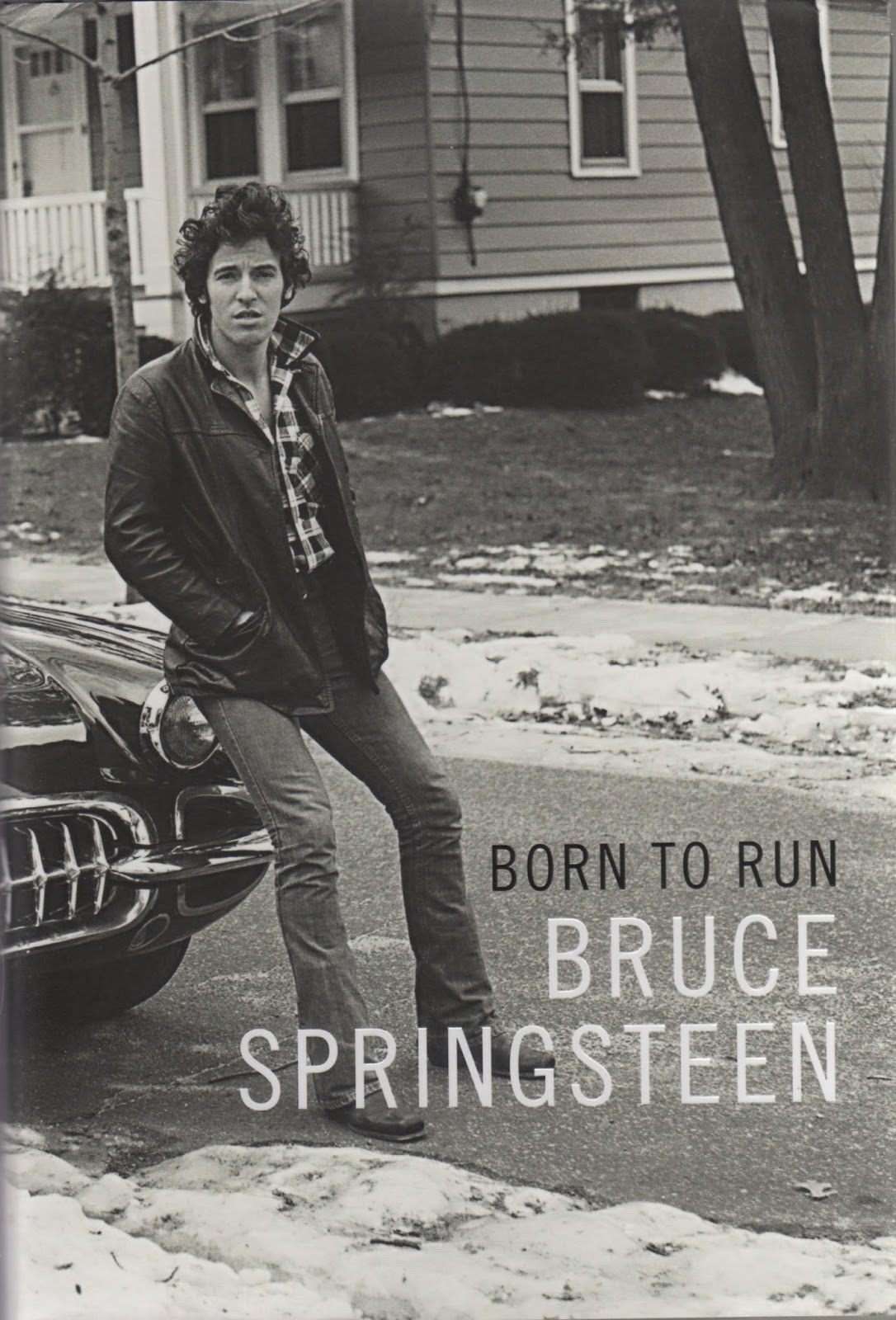
This was a birthday gift from my wife. I've been a Springsteen fan for about as long as you could be a Springsteen fan if you didn't grow up in Asbury Park. He got a lot of early radio play in Philadelphia. I'm not a big concert goer and I've only seen him perform once, and that was at a bar in New Jersey in 1975. Springsteen is just a little older than I am and I was able to empasize with his description of growing up a Catholic.
Another near-future dystopian novel. This one hit close to home as the various generations of the Mandible family are about the same ages as the generations in my family, so maybe I could live to see this future. As I got into it, it became clear that the novel describes a Libertarian nightmare, and was pretty implausible. Especially the part about Arizona leaving the union and forming its own country.
Another implausible story. What would happen, if overnight, a vast forest just sprang up out of the ground? This book answers that unlikely question. Although there's no reason or explanation for the central plot device, the characterizations of the people in the novel are good and believable.
This is the second novel by the author of "The Girl With All The Gifts", which I had enjoyed a great deal. I understand a movie based on the book will be coming out this year. "Fellside" tells a different story, about a young woman sentenced to prison (Fellside is the name of the prison) for the accidental killing of a young boy. While in prison she gets visited at night by an apparent ghost. The first 2/3 were pretty good but the ending got a bit beyond belief.
Monday, January 2, 2017
December 2016 Books Read
My reading goal for 2016 was to read 100 books. I fell a bit short only managing 83, which I guess, is still a lot of books. I'll have to try harder in 2017.
My youngest son and his girlfriend gave me this for my birthday. We've lived in the Houston Texas area since 1995, but I still don't know the history of the city that well. This was a good way to learn. Houston was founded on the banks of Buffalo Bayou in 1836 and the waterway has been the life blood of the city ever since.
It's 2052 in London. Harry IX is king after the dissolution of Parliament. A comet is streaking across the skies, prompting doomsday cults around the world. The environment is a mess. 100-year old Cuthbert Handley, is homeless and perhaps insane. He keeps hearing voices which he determines are the voices of the animals in the London Zoo, the last zoo on Earth. Let us free they say. This was a difficult book. It took Bill Broun 14 years to write it. Sometime surreal, sometimes funny, sometimes very sad, it tells of Cuthbert's long life from his beginning in rural England, where he watched his beloved older brother drown, to his late years in London, alcoholic, on the streets, barely surviving. I'm not sure what the point was but as difficult it was to read, it was worth the effort.
Another gift, this from my daughter for Christmas. I've read a lot of Margaret Atwood this year, never having read anything by her before. This is her first attempt at a graphic novel. In a city where the cat people (either people who can turn into cats or cats who can turn into people) a rat man invents a mutigenic formula which he hopes will make him the ultimate ruler. The guy on the cover gets accidentally exposed to the stuff in a car crash involving a cat and an owl. Pretty good but it's only the first volume!
This was a free Kindle book I got from Amazon via bookbub.com. There are a lot of moving pieces in this story which made it complicated and hard to follow. A brief nuclear war destroys civilization. A man (who apparently thinks he's a descendant of Jesus) uses his special powers to gather a remnant together in Utah, to save America. A Mexican drug lord has invaded the US with a army of out of a Donald Trump nightmare, raping and killing everything in sight. A woman doctor in Cleveland, who has some kind of powers (maybe she's a witch), decides to cross the country to be with her son (who's with the Jesus guy). A former marine, who had a brief affair with her years ago is helping. She hadtelepathically summoned him from the East Coast. And it goes on from there. A good enough read while riding the stationary bike at LA Fitness, but not not enough to read anymore. As far as I can tell, there are at least 5 more books in the series.
Abbey is a middle-class, overworked mother living in the Philadelphia suburbs with her husband, whose small business is failing. Over lunch one day with her best friend, she spots a photograph of Alex van Holt in a magazine. She'd met Alex years ago but turned down a date. Alex, the son of a rich Philadelphia family is running for Congress. "What might have been?", she wonders. Then she has a accident in a department store, banging her head. When she awakes, she finds out she actually is Abbey van Holt. Most of the book is her trying to figure out what happened to her and her old life and trying to learn what is expected of her as a van Holt. Pretty entertaining. I grew up in Philadelphia so the locale and references to Philadelphia and it's environs also kept the book interesting to me. Does she manage to live as Abbey van Holt, or does she get back to her old life? Sorry, that's a major spoiler.
Wednesday, November 30, 2016
November 2016 Books Read
November was a busy month. Not as much time for reading as I would have liked.
I'm not an enormous Neil Gaiman fan but have liked the stuff by him that I've read. This book is a collection of non-fiction work, mainly talks he's given at conferences, book reviews he's written and magazine and newspaper articles he's written. I thought it was going to be more about how he writes then it was but still mostly enjoyable. He talks about his childhood, how he discovered books and was saved by them and how he decided to be a writer. There are several chapters about other writers he's known. Some of this was interesting but I wasn't familiar with many of them so that was less enjoyable. I'd say if you're a Gaiman fan, read this.
This was a very unlike Stephen King book. For one thing, it was short. For another, it didn't have much plot. I liked listening to it because the reader was great. The cover makes this look like some 1940's noir fiction but the cover has absolutely nothing to do with the story. The book is about a female college journalism major who takes a summer intern job at a small newspaper on a small island off the (where else?) Maine coast. The old timers (one is 90) at the paper take to telling her about the greatest local mystery they knew. The mystery was about an unidentified dead man found on the beach. Eventually he was traced to Colorado (hence the title) but they couldn't figure out exactly how he could have made it from the last sight of him in Colorado to his first sighting at the town. Or why he choked on a piece of steak on the beach. Then the story ended.
A much more Stephen King like book. Long and exciting. The story takes place in a little town in western Pennsylvania in 1978. Christine was a beat up old 1958 Plymouth Fury which a local high school student buys for $250, much against his best friends advice, from the old man who owned her. Turns out the car is possessed. And, once given a little care, can self-repair. And go after the kid's enemies in the town. You may remember the cult classic move made by John Carpenter from around 1983. I liked the book so much I bought the DVD, which was surprisingly good.
Ex-Washington DC police detective, Frank Marr, just became a hero by rescuing a teen-aged girl from the drug gang that kidnapped her. But Frank doesn't want to be a hero. He was in a position to rescue the girl because he was stealing cocaine from the gang and accidentally found her. He was retired from the police force because of his cocaine habit. His superiors gave him a early retirement package to get rid of him. He'd been a good cop and they were afraid that every past conviction he'd been involved in might be overturned because his habit would make him an unreliable witness. Marr now works as a private detective, managing most of the time to keep his habit under control. This looks like the beginning of a series. I hope the second book is as good as the first.
This was more like a novella than a full novel. In this near future story, Marmeg Guinto is a girl who wants to be an engineer but, due to her social status, can't afford to get into college. In this time, bodily implants to increase muscle action and cognition are within the price range of almost anybody. She's cobbled together enough equipment to enter a competition, a race across the Mohave Desert, survivable only due to implants. She's written her own software and believes she has a chance. In addition to the excitement of the race, there is a lot of social commentary extrapolating from current events. A good read.
Are you familiar with Shakespeare's "The Tempest"? Well neither was I. Felix was the art director of a small Canadian town's annual Theater Festival. Every year he would put on a Shakespeare play. One year it was going to be "The Tempest", but he got fired due to the underhanded actions of his assistant. 12 years later, he's now running a theater class at a local prison. Once again he's going to put on "The Tempest", but this time, he's going to get revenge on those responsible for his long ago disgrace. The story of the story parallels the story of "The Tempest". I know this because, as he works with the prisoners, he teaches them (and the reader) what "The Tempest" is all about. I almost gave up on this a few chapters in but I'm glad I didn't. Very enjoyable book.
Wednesday, November 2, 2016
October 2016 Reading List
My goal of reading 100 books this year looks lost. I'll have to read 30 books between now and the end of the year. Not likely. Oh, well. I did manage 9 in October.
This is a sequel to Stewart's highly enjoyable historical novel "Girl Waits With Gun" about the first lady sheriff in New Jersey, Constance Kopp. Kopp was a real person who actually was the first lady sheriff in New Jersey and the first book was based on actual news reports from around 1914. The second book reads more like straight fiction but was still enjoyable. Constance, hired as a deputy sheriff at the end of the first book, is finding it difficult to hang on to her job. Her boss, Sheriff Heath is having problems with the county over hiring Constance and can't give her a badge as yet. In fact, she's working as the jail matron, taking care of the women prisoners. She's given temporary duty of watching over a male prisoner at the local hospital and accidentally allows him to escape. She spends much of the rest of the story trying to recapture him, in her spare time, without authorization. Not quite as good as the first installment but still pretty good.
As the cover proclaims, this is a Bill Smith/Lydia Chin novel. I think it's the third of I don't know how many (at least 10). Bill Smith is a private investigator working in New York City. Lydia Chin is researcher who does work for Smith when he needs her. Smith goes undercover at an old age home in the Bronx where a security guard, who worked for a friend of Smith's, gets killed on duty. It was a bit convoluted and Smith gets beat up a lot. The obvious suspects turn out to be just innocent gang member bystanders.
I've read a lot of these Hamish Macbeth mysteries, mostly as audio books, which have their own charm beyond the story itself. Hamish is a constable working a lonely Scottish coastal town which seems to have the highest murder rate of any comparably sized town in the world. But Hamish always solves the case no matter what obstacles his superiors, the neighbors, the weather or his pets throw in his way. I'm afraid this is one of the weaker stories in the series. There are a lot of on-going characters in the series and Beaton seems determined to get each one in the story, no matter what.
One day, while a young girl was walking in the woods near her home, the ground opens up beneath her feet and she find herself standing in a deep hole, in the palm of a giant silver hand. Years later she is a physicist working to solve the mystery of the hand. It turns out to be a part of an enormous statue and the government assembles a team to find more pieces of the statue around the world. The story is kind of weirdly told through a series of interviews with a mysterious, but powerful, government agent, and journals kept by various team members. It was interesting but hard to follow at times. It's also the first book of a series so there is no clear resolution at the end of the book.
I've been a long time reader. I got my first library card when I was 6, and as such, I like the actual physical manifestation of a book, more than say, reading a novel on a Kindle. "The Book" tells the history of books, from folded up pieces of papyrus, through parchment to modern paper. From hand written books, through wood-block printing, Gutenberg, and on to modern offset printing. "The Book" as also a beautiful object in and of itself, printed on heavy cream colored paper with substantial covers. Very interesting.
This near future (maybe 10 years from now) novel attempts to answer the question "What would you do if you had access to a device that would allow you to go into the past and change one thing, the one thing that made your current like the way it is"? Along the way, the author packs into the story as many near future things he can think of like driverless cars, interactive television, social media gone berserk, a dating site which, if you can't find a match, just invents someone for you, and a succession movement in the Dakotas. Rebecca Wright's husband is working on a device which supposedly allows an object to travel backward to a specific point in time. Problem is, he and his team can't figure out if it's working or not. Meanwhile, Rebecca can't shake the feeling that something is wrong with her life. It took this story awhile to get going but it was worth the effort.
I have a different standard for audio books than print books. I'll often stick with an audio book long past the point I'd last if I was reading the book. Especially if the narrator is doing a good job. This is one of those books I think I'd have given up on early in print. Arthur Cathcart has a nice life. He's married to a beautiful woman who runs a successful business. He works from home as an investigator, mainly looking for missing persons or doing marketing research. One day, an unknown gunman breaks into his home and shots Arthur and his wife in the head. The wife dies but, somehow, Arthur doesn't. He spends the rest of the book, plotting his revenge while seeking to find the person or persons responsible. More questions get asked than get answered. The plot gets more and more convoluted. I pretty much had lost track of how parts of Arthur's plans were supposed to advance his revenge. Then the book ended with the promise of a sequel, which apparently hasn't been published yet.
Another near future novel, only set maybe 80 years away. Tima and Theama are conjoined twins growing up in a radical religious and isolated community in California. The Pacific coast states have broken away from the US and formed their own country. Most of the story takes place in a San Francisco that seems totally isolated from everything. The twins escape the compound when they are 16 and find a world in which science has transformed society (or at least San Francisco) into a near paradise of virtually no crime and perfect health. They are separated and live productive lives. But Tima is restless and wants to know more about the community they escaped from. She finds an ugly underworld in SF and has to draw in her sister to save her. Pretty good. This is also the start of a series.
Neil Gaiman is known to serious graphic novel readers as the author of the widely acclaimed "Sandman" novels. My daughter is a big fan and has gotten me to read several of his other non-graphic works. I misread the liner notes of this book and thought it was going to be more about his creative process. I'm no artist myself but enjoy reading about how it's done. Although the book has some of that, a lot of it is speeches and book introductions he's written over the years. Mostly interesting but if you don't know Gaiman at all, I'm not sure I'd recommend it.
Subscribe to:
Posts (Atom)